
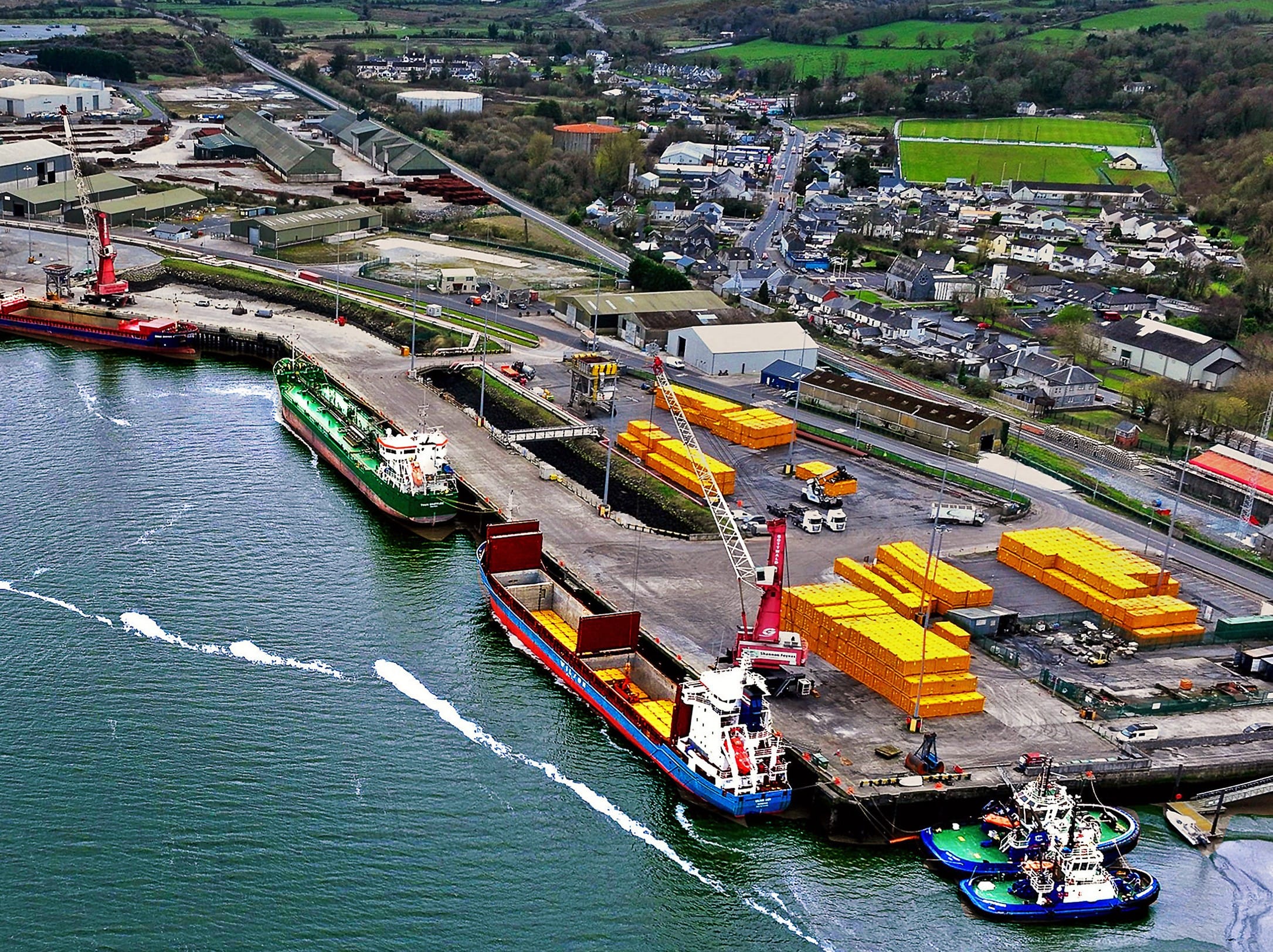
Record throughput drives growth at Shannon Foynes Port.
Connectivity to Foynes via new road is essential for port to relieve pressure on east coastridge.
Shannon Foynes Port Company (SFPC) delivered record tonnages through its primary port at Foynes in 2025, emphasising the growth opportunity at Ireland’s second largest port company.Tonnages at the west Limerick port increased by 10.8% year-on-year, making 2025 the busiest ever year at the port.
According to CEO Pat Keating, the results again validate the company’s growth ambition. But he said that enhanced port connectivity – particularly the delivery on time of the Limerick to Foynes road – is critical for the Shannon Estuary port to fulfil its potential, which would relieve pressure on the national supply-chain, particularly the east coast.
Total tonnage across the six terminals overseen by SFPC on the Estuary rose by 2.3% to 9.36 million tonnes in 2025, up from 9.15 million tonnes in 2024, reflecting strong performance across key sectors and reinforcing the strategic importance of the Estuary to Ireland’s national freight and energy infrastructure.
The record performance at Foynes Port was driven by particularly strong activity in energy, agri, construction, bulk commodities, and containerised/unitised cargoes. While the container service currently operates as a closed-loop system, it has nonetheless provided SFPC with a strong platform to demonstrate Foynes Port’s capability as a full-service container port.
The overall performance provides further confidence in SFPC’s twin strategic objectives of developing Foynes as both a national freight and logistics hub and a key offshore energy marshalling port, particularly as Ireland positions itself to capitalise on offshore renewable energy opportunities.
However, SFPC has cautioned that inflationary pressures on energy markets are likely to affect fuel volumes, while rising costs across downstream sectors may dampen demand more broadly.
Commenting on the results, CEO Pat Keating said, “Achieving record throughput at Foynes Port is a significant milestone and reflects both the strength of our customer base and the strategic importance of the Shannon Estuary to Ireland’s economy. Growth across energy, agri and other key sectors highlights the importance, resilience and diversity of activity at the port.
“These results reinforce our confidence in the long-term vision for Foynes as a national logistics hub and offshore energy centre. However, they also underline the urgent need to unlock the full potential of the port through critical infrastructure.”
Mr Keating emphasised that hinterland connectivity remains the single most important enabler of future growth at Foynes Port and its unrivalled capacity to relieve pressure on national logistics.
“To fully leverage the deep-water capacity of Shannon Foynes Port, it is imperative that planned connectivity is delivered without delay. Alongside the Limerick to Foynes rail reinstatement, the Limerick to Foynes Road is central to this.
“Ultimately, the new road will provide much-needed national port capacity, reduce freight congestion, shorten journey times and support Ireland’s climate objectives. However, given the record volumes now being achieved at Foynes, there is a clear opportunity, and necessity, to fast-track the full delivery of this route. The demand is here, the capacity is here, and the economic benefits are clear.”
Port Chair, Michael Walsh said that enhanced connectivity will not only support increased throughput but also enable the port to play a greater role in regional and national economic development by providing a counterbalance to congestion at east coast ports.
“When the road is complete, our access to the national motorway network will be completely seamless from Foynes. No other port in Ireland will have that level of connectivity. That means we will be able to get goods to the likes of south Kildare as quick as it will take to move them from Dublin. That will relieve huge pressure on the national supply chain,” he added.